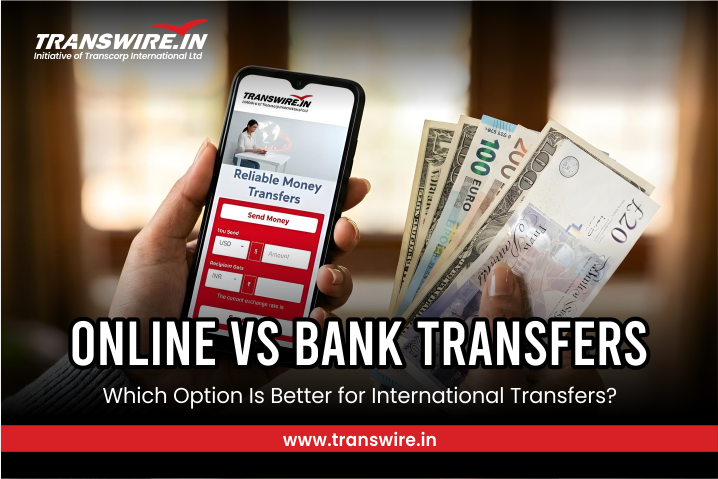
Users like clarity on the transfer method to use. Internet transfers offer better exchange rates, lower fees, and quick delivery. Bank transfers are also reasonable for large or corporate payments, but they are more expensive and take longer.
In general, online transfers are recommended for routine remittances, education payments, allowances, or business payments that require speed and transparency. In cases where formal banking facilities are essential, bank transfers can be done. It gives a clear answer on which is better online transfer or bank transfer, depending on the user’s needs.
Understanding Online Transfers vs Bank (SWIFT) Transfers — What’s the Real Difference?
The general desire of the majority is to have a simple explanation of how online transfers differ from traditional SWIFT transfers. Online transfers use electronic platforms to transfer your funds quickly and openly, whereas SWIFT transfers rely on older banking channels that involve several intermediaries. These disparities directly affect the speed, charges, and overall experience, enabling the user to make a well-informed international money transfer comparison.
| Factor | Online International Transfer | Bank (SWIFT) Transfer |
| Speed | Same-day or within hours | 2–5 business days |
| Fees | Low, transparent, no intermediary deductions | High; includes SWIFT, sender, intermediary & receiver charges |
| Convenience | 100% online, no branch visit | Often requires forms & branch visits |
| Exchange Rates | Competitive, near mid-market | Higher markup, less transparent |
| Tracking | Real-time tracking via app/portal | Limited tracking once in the SWIFT chain |
| Intermediary Banks | None or minimal | Multiple intermediaries deduct fees |
| Best For | Students, families, freelancers, urgent needs | Large, formal, or corporate transfers |
The above comparison can help you easily observe the practical differences and choose the way that suits your needs.
Online vs Bank Transfers — Which Option Is Better for International Transfers?
Users want clarity about which transfer method suits their purpose. Online transfers offer better exchange rates, lower fees, and faster delivery. Bank transfers still make sense for extremely large or corporate payments, but they come with higher costs and slower timelines.
Overall, online transfers are ideal for routine remittances, education fees, allowances, or business payments that need speed and transparency. Bank transfers may be used when formal banking channels are specifically required.
What Is the Cheapest Way to Send Money Abroad?
One of the most significant factors in a decision is cost. The most cost-effective way is usually online platforms because they are transparent, have low operating costs, and involve minimal intermediaries.
Bank transfers, on the other hand, charge several fees, including sender fees, SWIFT routing fees, intermediary fees, currency markups, and so on, reducing the amount the receiver receives.
What Is the Fastest Way to Transfer Money Internationally?
People are often interested in finding out the fastest way to transfer money internationally, and online services are always quicker than banks—numerous real-time corridors credit money in minutes or on the same day.
Bank transfer usually takes between 2 and 5 business days. The delivery is hindered by processing delays, global time zones, weekends, and routing paths.
What Is the Safest Method to Send Money Overseas?
The two are controlled, albeit in different ways, in terms of transparency and management. The online platforms provide high-level encryption, online KYC, and real-time monitoring, resulting in the highest level of user visibility.
SWIFT is secure with bank transfer, but cannot be observed in real time after leaving the bank where the transfer occurred. It usually takes several days to reverse or trace a late SWIFT payment.
Why Do Bank Transfers (SWIFT) Have Deductions or Intermediary Fees?
Surprisingly, many users receive less money than they expected their recipient to receive. It is owed to the intermediaries’ charges. A processing fee is deducted by each correspondent bank in the SWIFT transaction chain before passing the transaction.
These deductions are random and depend on the route. With an online international transfer platform, one can skip the middleman (the bank) and ensure the recipient receives the full amount.
Can You Send Money Internationally Online Without Visiting a Bank?
Yes. It is one of the primary reasons why online transfers are becoming popular. All you need to do on your mobile or laptop is register, complete KYC, pay electronically, and watch your transfer.
Transfers via online platforms are supported for up to 30-40 major currencies, in line with the RBI LRS limit of USD 250,000 per financial year, making them convenient for students, professionals, and families.
How to Avoid High Fees and Get Better Exchange Rates When Sending Money Abroad
Avoiding high fees and getting better exchange rates might feel overwhelming. Here are the quick ways you can manage it perfectly with your international transactions:
Comparing Exchange Rates Before Sending
Getting live rates helps ensure you are not losing money to high FX markups. Even minor variances can significantly affect the amount credited.
Avoiding Hidden Fees and Extra Charges
Other providers conceal charges within the margins of exchange rates or impose receiving fees. Open systems display all costs upfront, thus you will always know what you will get at the end of the day.
Choosing the Right Platform Based on Amount and Urgency
Online transfers are fast and economical for transferring small to mid-sized sums. Restaurant payment should be secured by well-known platforms that guarantee the highest level of compliance and stable processing.
Online vs Bank Transfers for Large vs Small International Transfers
The size of the transfer matters a lot in choosing the optimal approach. Small and medium payments are well-suited to online transfers due to their low costs and speed.
Significant transactions may occasionally be routed through a bank for formal verification or to comply with specific regulatory requirements. Still, even large digital transfers are now enabled in bulk via secure online transfers.
What Documents Do You Need for Online Transfers vs Bank Transfers?
Users are always concerned with documentation. The availability of online transfers eases the experience of digital uploads, whereas banks require a higher level of human verification.
Documents Required for Online International Transfers
- PAN Card
- Passport or government-issued photo ID
- Address proof (Aadhaar, utility bill, rental agreement)
- Beneficiary bank details
- Proof of purpose (invoice, fee receipt, medical bill, travel letter)
- LRS declaration (digitally completed on the platform)
Documents Required for Bank (SWIFT) Transfers
- PAN Card
- Passport / Aadhaar / government-issued ID
- Physical A2 Form
- Bank’s foreign remittance request form
- Purpose-of-remittance documents (education, medical, travel, family maintenance, etc.)
- Additional in-branch verification for high-value transactions
- Additional declarations depending on bank compliance
This simple breakdown will ensure that the users know exactly what to prepare and avoid confusion.
Final Thoughts— Which Is Better: Online Transfers or Bank Transfers?
In comparison, both techniques are crucial, although online transfers are quicker, less expensive, more transparent, and generally much more convenient for everyday remittances. Bank transfers have their place in specific high-value or formal transactions, but are still slow and more expensive than digital ones.
Online transfers are the better of the two when it comes to convenience, modernity, and ease of use, and are thus preferred in most applications.
Send Money Abroad Faster, Cheaper, and Smarter with Transwire
Transwire offers secure, RBI-authorised online international transfers with transparent pricing, fast processing, and 24×7 support. Whether you’re sending funds for education, travel, family support, or business, Transwire ensures a seamless global payment experience with no hidden charges.
Start your transfer today at Transwire. in and experience a better way to send money abroad.
FAQs for International Money Transfer
1. What is the difference between online money transfer and bank (SWIFT) transfer?
Online transfers move money digitally with lower fees and faster delivery, while SWIFT bank transfers route through multiple intermediary banks, making them slower and more expensive.
2. Which is better for international transfers: online remittance platforms or traditional bank transfers?
Online remittance platforms are generally better for speed, cost, and transparency, while bank transfers are mainly suited for large or highly formal transactions.
3. What is the cheapest way to send money abroad?
Online international transfers are usually the cheapest because they offer competitive exchange rates and avoid intermediary bank fees.
4. What is the fastest way to transfer money internationally?
Online transfers are the fastest, often completing within minutes or the same day, compared to SWIFT transfers, which take 2–5 business days.
5. Why do bank transfers (SWIFT) have intermediary deductions, and how can I avoid them?
SWIFT transfers pass through multiple correspondent banks that deduct processing fees, which you can avoid by using direct online transfer platforms.