Moving money across the border might seem like a complicated affair, yet with a platform like Transwire, it can be easy, safe, and fast. You may be willing to transfer money abroad from India so that you can study, meet a family member, or do business; however, to save some time and unnecessary expenses, it is better to know how it works, what regulations are to be followed, and what is the most effective way to do it.
This tutorial will take you through everything you need to know about transferring money across India in a practical, step-by-step manner.
Understanding How to Transfer Money Abroad from India
Before knowing how to transfer money internationally from India, it is essential to understand why individuals transfer money abroad and how different purposes can affect the process, limits, and documentation. This assists you in selecting the appropriate approach and in remaining within the rules.
Common Reasons to Send Money Abroad from India
Indians send money abroad from India to meet various personal and professional needs. Every purpose is under the RBI-approved:
- Education Abroad: Tuition fees, accommodation, and living expenses for students studying overseas.
- Family Maintenance: Supporting close relatives living in another country for daily expenses.
- Medical Treatment: Paying for healthcare, surgeries, or emergency treatments abroad.
- Travel and Tourism: Expenses for vacations, international trips, or business travel.
- Business Payments: Paying vendors, freelancers, or international service providers.
- Gifts and Donations: Sending financial gifts to friends or contributing to global charities.
Step-by-Step Process to Transfer Money to a Foreign Bank Account from India
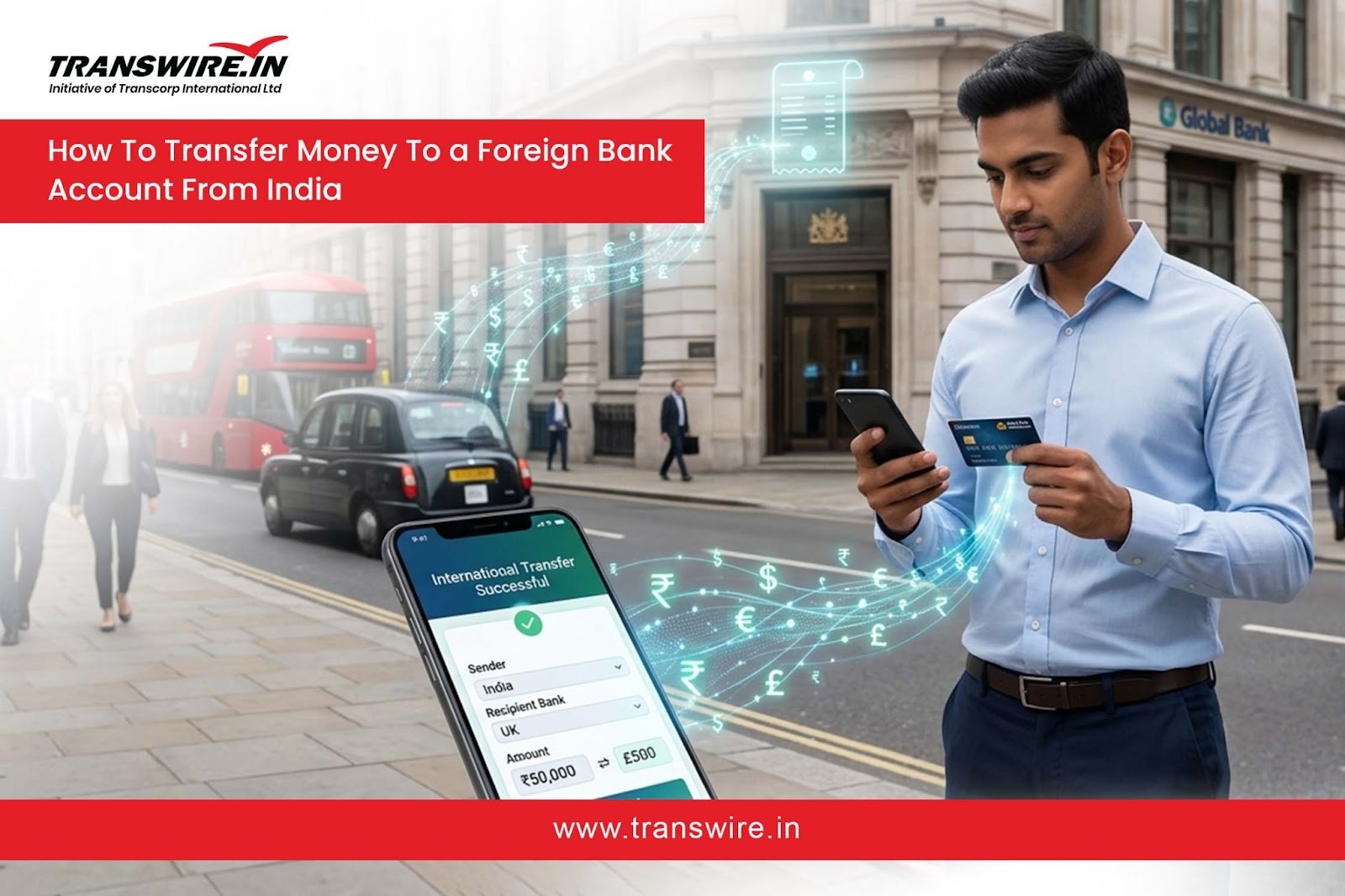
In case you are asking how to transfer money to foreign bank account from India, the whole process must be organised and can be done online or offline. A correct transfer is a painless process that only follows the right steps.
Step 1: Choose the Right Transfer Method
Start by selecting the best method based on your needs:
- Bank wire transfer (SWIFT)
- Online money transfer platforms
- Forex services
Your choice depends on speed, cost, and convenience.
Step 2: Add Recipient Details Correctly
Hand in details of the beneficiary, including bank account number, SWIFT code, and bank name. The slightest mistake will either delay or deny your transfer.
Step 3: Enter Amount and Purpose of Transfer
State the amount and select the purpose (education, medical, etc.) as required by the RBI.
Step 4: Complete KYC and Documentation
Presentation of necessary documents like PAN card, Aadhaar, and bank verification. This is a condition of conformity.
Step 5: Confirm and Track Your International Transfer
Check everything, confirm the transaction has been completed, and monitor the transfer status on your bank or platform dashboard.
Users nowadays are inclined towards platforms such as Transwire, where they are guided through all the steps they take, saving time and minimising errors.
What Information Is Required for an International Money Transfer from India
To send money to a foreign bank account in India, both the recipient and the sender must provide accurate information. One of the most frequent causes of transfer delays is the missing or wrong information.
Essential Recipient Bank Details You Need
Ensure you collect the following details from the beneficiary:
- Full name (as per bank records)
- Bank account number
- Bank name and branch
- SWIFT/BIC code
- IBAN (for European countries)
- Routing number (for USA)
- Bank address
Sender Requirements and KYC Documents
As a sender, you must provide:
- PAN card (mandatory for foreign remittance)
- Aadhaar or identity proof
- Address proof
- Bank account details
- Purpose declaration (as per RBI guidelines)
RBI Rules and Limits for Sending Money Abroad from India
The Liberalised Remittance Scheme (LRS) by the RBI regulates all overseas transfers of money by Indians. Knowledge of these rules will help you follow the rules and avoid punishment.
Key RBI Rules and Regulations:
- Maximum limit: USD 250,000 per financial year per individual
- Transfers must be for approved purposes (education, medical, travel, etc.)
- A PAN card is mandatory for all international transfers
- TCS (Tax Collected at Source) may apply depending on the purpose and amount
- Transactions must go through authorised dealers (banks or licensed providers)
- Remittances to restricted countries are not allowed
- Proper documentation is required for high-value transfers
Best Methods to Transfer Money Abroad from India
Indians can send money overseas in various ways, each having varying benefits in terms of speed, cost, and convenience. Selecting the correct approach is a matter of priority. Here’s a quick comparison to help you decide:
| Method | Speed | Cost | Convenience |
|---|---|---|---|
| Bank Wire Transfer | 3–5 days | High | Moderate |
| Online Transfer Platforms | 1–2 days | Medium to Low | High |
| Forex Services | 1–3 days | Competitive | High |
| Demand Draft | 7–30 days | Medium | Low |
How Long Does It Take to Transfer Money Internationally from India
The time it takes for the money to reach the recipient after an international money transfer varies. This is one of the most common concerns of doing an international money transfer in India. This will take different lengths depending on the approach and outside influences.
Average Processing Time by Transfer Method
- Bank transfers: 3–5 working days
- Online platforms: 24–48 hours
- Forex services: 1–3 days
- Demand drafts: Up to several weeks
Factors That Affect Transfer Speed (Bank, Country, Compliance Checks)
There is a different time gap between the sender and the receiver of the amount, which depends on different factors, Such as:
- Destination country and banking network
- Intermediary banks involved
- Weekends and public holidays
- Compliance and verification checks
- Accuracy of recipient details
Using digital-first platforms like Transwire, transfers may take just 24 to 48 hours, so they are best used for urgent payments, such as tuition or medical bills.
Charges for International Money Transfer from India
Knowing the cost structure is paramount when transferring money to a foreign bank account in India, as costs may include hidden charges that can significantly affect the final amount.
Common Charges Involved:
- Transfer Fee – Fixed or percentage-based fee charged by banks or providers
- Exchange Rate Markup – Difference from mid-market rate
- Intermediary Bank Charges – Fees deducted during SWIFT routing
- GST and Taxes – Applicable as per Indian tax regulations
- Receiving Bank Fees – Charges applied by the beneficiary’s bank
Alternatives to Bank Transfers for Sending Money Abroad Faster
When customers experience traditional bank transfers as slow or costly, there are other, better, and more efficient transfer options available today. These are the most popular flashy ways to transfer money internationally in India.
Online Money Transfer Platforms
Platforms like Transwire are the choice of many people because of:
- Faster transfers
- Transparent fees
- Better exchange rates
Fintech Solutions for Faster Transfers
Modern fintech solutions use advanced technology to:
- Reduce transfer time
- Minimize costs
- Improve tracking and transparency
When to Choose Alternatives Over Banks
Consider alternatives when:
- You need faster delivery
- You want lower fees
- You are transferring smaller amounts frequently
Conclusion: Choosing the Right Way to Send Money Abroad from India
The way to send money to a foreign country from India depends on your priorities, whether speed, cost, or convenience. Knowing the process, required details, RBI regulations, and possible options, you will be able to make the most appropriate decisions, avoid chaos, and save time on unnecessary expenses.
In need of a quicker, smarter, and less expensive method of sending money overseas from India? Consider using modern digital platforms that make the whole process significantly easier while remaining as effective, secure, and compliant as possible.
Get international exchange rates, pro expertise, and easy tracking after selecting TransWire as a smarter international money transfer today.
FAQ’s
1. How do I send money from India to a foreign bank account?
Indian money can be sent to foreign countries via bank wire transfer, online remittance services, or forex services by adding the recipient’s information, completing KYC, and confirming the transfer.
2. What information do I need about my recipient for an international transfer?
You will require the recipient’s full name, bank account number, bank name, SWIFT/BIC number, and country-specific details, such as an IBAN or routing number.
3. How much money can I send abroad from India (RBI limits)?
Within the Liberalised Remittance Scheme (LRS) provided by RBI, you will be allowed to transfer a maximum of USD 250,000. per financial year per person with allowed purposes.
4. How long does an international money transfer from India take?
The average time to complete an international money transfer in India is 1-5 working days, depending on the transfer method, the destination country, and the verification process.
5. What are the charges for transferring money abroad from India?
Transfers, exchange rate markups, intermediate bank fees, and applicable taxes vary by bank or service provider.