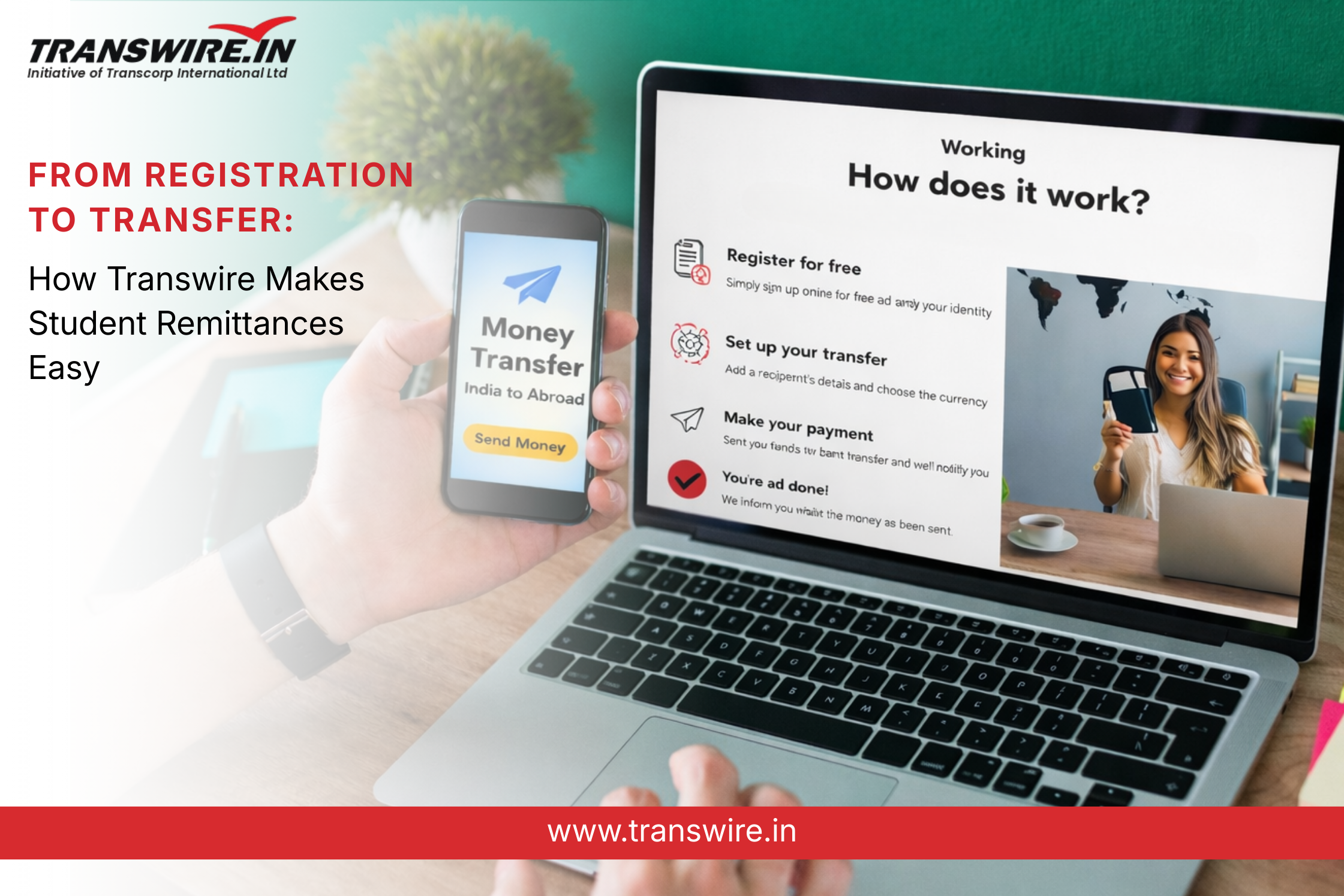
One of the most significant- and, in many cases, the most stressful aspects of the study-abroad experience is paying tuition fees abroad. Once substantial sums of money, tight time limits, and a foreign banking network are compounded, the slightest error can result in wasted time, unwarranted expenses, or legal concerns. Knowledge of the most common international money transfer mistakes and how to prevent them can enable students and their families to transfer money overseas without worry or stress.
Understanding Student Fee Transfers Abroad
Students and parents often seek clarity on how international tuition payments work, why transfers are more likely to take longer, and what may go wrong. In contrast to domestic transfers, overseas payment of the fees is accompanied by rigorous verification, compliance with international laws, multiple banks, and exchange rates. Student money transfer mistakes occur because families lack an understanding of how international remittance chains work.
To make it simple, the following is the standard passage of your fee:
| Stage | What Happens | What Can Go Wrong |
| 1. Sender Bank | Initiates transfer | Wrong account details, compliance hold |
| 2. Intermediary Bank(s) | Routes payment internationally | Unexpected deductions, delays |
| 3. Receiving Bank | Credits fee to the university account | Incorrect reference, mismatch of student ID |
| 4. University Finance Office | Allocates payment to the student | Missing Student ID, underpayment due to fees |
Understanding this journey is key to avoiding unnecessary issues.
Common Mistakes Students Make During International Tuition Transfers
Students usually want to know the actual errors that cause failed, stuck, or delayed payments before seeking solutions. These are the mistakes that keep recurring throughout the student experience, support enquiries, and banking records.
Entering incorrect or incomplete bank details, such as SWIFT, IBAN, or beneficiary name
Among the most frequent international money transfer mistakes is entering incorrect banking information. A single digit in the IBAN, SWIFT code, or beneficiary name can result in a bank mistakenly transferring or remitting the money to the wrong account. Always replicate the information as it appears on the university’s official portal.
Forgetting to add the student ID or reference number required by universities
Payment references are used in universities to match the amount received to a particular student. If you do not have the correct student ID, the funds may be deposited into the university’s bank account without allocation, delaying enrollment or registration.
Sending tuition fees too close to deadlines without considering bank cut-off times
Banks adhere to cut-off times for international transfers. When a transfer is made outside the hours or on a weekend or holiday, payment can be made several days later. This time error often triggers panic among students when fees have not been captured for the time.
Ignoring exchange rate markups and hidden intermediary bank charges
The most significant cause of the unexpectedly high tuition fees is the failure to account for FX markups. Processing fees may also be deductible along the way, meaning the university may be given an amount less than what is required.
Relying on unverified or unofficial payment links shared via email or social media
Fraudsters tend to copy university email addresses or websites. Using such links to pay money can be a total loss of cash, as these avenues cannot be tracked or reversed.
Using unregulated money transfer services that risk delays or compliance holds
Some services might promise low charges but fail compliance checks, and the transfer is frozen. Use regulated platforms every time that comply with RBI and international remittances regulations.
Not tracking transfers or saving receipts for university verification
Live-time tracking helps determine the point of payment stalling. The absence of a receipt or SWIFT confirmation makes it challenging to resolve a dispute, as universities cannot follow up on your funds.
Sending money from accounts that violate compliance rules for education transfers
Remittances made through personal accounts without authorization, under business accounts, or with mismatched names usually lead to checks and delays.
Why International Student Transfers Get Delayed or Stuck
The question that often arises in students’ minds is why transfers are delayed when everything on the surface appears right. International payments are routed through multiple stages of authentication before reaching the university. Delays may be due to bank holidays, time taken by intermediary banks to process, incorrect references, or compliance issues. When your university tells you the payment hasn’t arrived, it is most likely still in transit through the banking system or awaiting distribution.
Preventing Errors in Sending Money Abroad
The significant errors in sending money abroad occur due to a lack of verification, non-adherence to instructions, or the use of insecure services. Prevention starts with:
- Using regulated transfer platforms
- Double-checking university bank details
- Tracking all transfers
- Understanding fees and timelines
- Making payments well before deadlines
Platforms, including Transwire, make this easier by providing real-time tracking, transparent fees, and compliance with transfer requirements.
Handling Wrong Transfers and Reversal Issues
Among the most tense situations is when a transfer is sent to the wrong account. In this event, only when the money is not withdrawn can banks attempt a reversal. Unsuccessful operator transfers to the destination bank are automatically returned, but this takes several days. The trick is to do that quickly and have the right paperwork, such as the transfer receipt and beneficiary information, to back up reversal requests.
Hidden Costs, Exchange Rates & Banking Fees Students Often Overlook
Even the slightest difference in FX rates can influence massive tuition transfers. Students often miss:
- FX markups by traditional banks
- Intermediary deductions are not shown upfront.
- Receiving charges at the university bank
- Double conversions when using the wrong currency pathways
Always compare landed cost—not just shown fees.
Safety Risks & Scams Targeting International Students
International students are likely to be exploited when paying fees. Common red flags include:
- Requests for COT codes, anti-money laundering fees, or “unlock charges.”
- Fake university email IDs offering a “discounted fee portal.”
- Payment links are shared via agents or WhatsApp.
- Social media ads promising “zero-fee instant transfers” without regulatory licensing
Always verify bank details directly on official university portals.
Parent & Guardian Transfers: Common Mistakes and Safe Practices
Parents might be paying tuition fees, but they may not be familiar with international banking standards. Delays can be caused by outdated bank details, an incorrect purpose code, or funds sent near the deadline. To make payments without any hassles, parents are to verify the new transfer guidelines on the site and resort to effective, controlled transfer systems.
Best Practices to Ensure Smooth, Error-Free International Tuition Payments
The students also frequently seek guidance on how to prevent problems related to transfers. It is a summary of the relevant best practices that all the students or parents must consider to make their international fee payments hassle-free, secure, and stress-free. These will reduce delays, prevent compliance blocks, and help prevent the recurrence of international money transfer mistakes.
Verifying university account details through official channels before paying
It is always essential that students save at least 2-3 minutes to ensure that the university bank information is correct and is made available on the official portals, not through forwarded emails. It will avoid misdirected transfers and fraud.
Scheduling fee transfers with enough buffer time for processing
Sending the fee at least 5-7 days before the deadline leaves plenty of time to account for banking delays, cut-off, and university allocation.
Cross-checking payment references, student numbers, and beneficiary names
Proper references enable universities to match your payment immediately. Their verification prevents the delays of allocations.
Tracking transfers and keeping digital proof for future verification
A SWIFT copy or payment confirmation will also help if the university fails to track your payment, thus preventing the action that will occur in a short period.
How students can avoid repeating common international money transfer mistakes
With knowledge of the process, regulated platforms, the ability to track payments, and record-keeping, the majority of problems can be avoided before they happen.
Final Thoughts: Students Navigating Overseas Tuition Payments
The process of handling foreign payments of fees does not have to be stressful. Planning, addressing the main mistakes, and selecting precisely controlled services would allow students and families to ensure safe, smooth, and on-time transfers. There are some reliable sites, such as Transwire, that ease the process with improved rates, quicker settlement, and reliable compliance, giving you all the peace of mind when paying tuition in a foreign country.
Transfer smarter, safer, and faster with Transwire—start your seamless tuition payment today.
FAQs On Student Money Transfer Mistakes
1. Why do international student fee transfers take so long, and what delays should I expect?
International fee transfers take longer because they pass through multiple banks, undergo verification checks, and use various currency routes, often causing 2–5 day processing delays.
2. What should I do if my tuition fee transfer hasn’t reached the university yet?
If your tuition hasn’t arrived, immediately track the transfer, obtain the SWIFT copy, and contact both your bank and the university’s finance office to verify allocation.
3. What happens if I enter the wrong account or beneficiary details during an international transfer?
Entering wrong details can cause the payment to fail, bounce back, or get misdirected, requiring an urgent recall request through your bank.
4. Can I get my money back if I transferred my tuition fees to the wrong person or wrong account number?
Yes, recovery is possible if the funds haven’t been withdrawn, but it requires a recall request and cooperation from the receiving bank or recipient.
5. How can international students avoid common mistakes when sending tuition fees abroad?
Students can avoid mistakes by verifying bank details, adding correct student references, using regulated services, tracking payments, and sending fees ahead of deadlines.