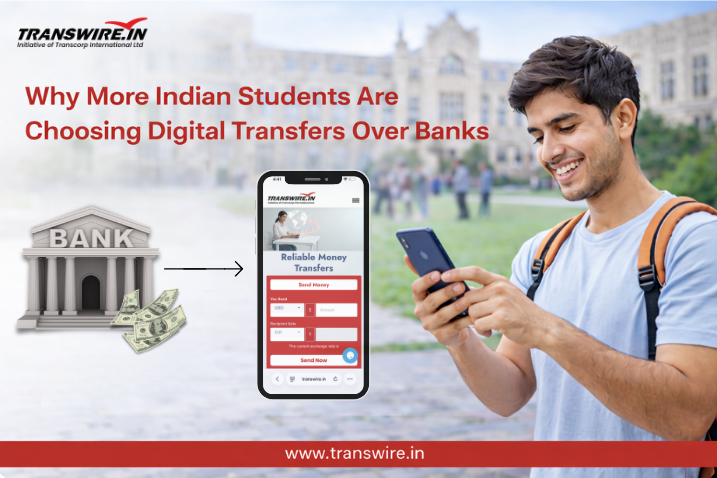
International money transfers are a significant issue, and studying abroad has become a common target for Indian students. Students require a system that is cheap, quick, open, and easy to control, even when far away, in terms of tuition fees, rent, and daily living costs. That is why an increasing number of Indian students are abandoning traditional banks and resorting to online digital transfer solutions to make international payments.
What Is a Digital Transfer and How Does Digital Transfer Online Work?
Digital transfer enables money to be transferred across-borders electronically through online channels without necessarily visiting a bank or going through paperwork. This method is flexible, fast, and clear to students who regularly pay high fees abroad.
What Is the Meaning of Digital Transfer?
A digital transfer refers to the act of sending money to other countries via secure online networks rather than conventional banking networks. These transfers save on middlemen, time waste, and present costs, as shown in the initial stages, and are therefore best suited to students with constrained budgetary limits.
How Digital Transfers Work for Global Student Payments
For global students, payments can be initiated via online transfers, with complete digital verification, to universities or recipients in other countries. Payments can be monitored in real time, exchange rates are displayed in advance, and the goods are delivered within hours.
Digital Transfer vs Bank Transfer – Understanding the Key Differences
Digital transfer vs bank transfer is one of the comparisons that students make when deciding how to transfer money to another country. The difference lies largely in speed, cost, and transparency.
Quick Comparison: Digital Transfer vs Bank Transfer
| Factor | Digital Transfer Online | Bank Transfer |
| Speed | Same day or within hours | 2–5 business days |
| Fees | Low and upfront | High and often hidden |
| Transparency | Full cost shown before sending | Deductions may appear later |
| Convenience | Fully online | Branch visits may be required |
Online Transfer vs Bank Transfer: Cost, Speed, and Transparency
Digital transfers also offer competitive exchange rates and low fees, whereas banks may apply a larger FX markup and intermediary fees. Digital transfers are more predictable in terms of cost and are delivered more quickly to students who send money regularly.
Why Traditional Bank Transfers Feel Slower for Students
Bank transfers are hampered by outdated infrastructure and multiple approvals. Time-sensitive payments to the student, such as tuition fees, are prone to delays due to weekends, international routing, and paperwork.
Why Indian Students Prefer Digital Transfers Over Traditional Banks
Digital transfer is the preferred choice for Indian students over traditional banks, as it is quicker, more transparent, and generally cheaper to make overseas payments. Digital transfer online solutions do not require paperwork or other hidden charges, and unlike banks, they suit students’ needs for frequent, time-sensitive payments for education and living expenses.
Why Do Customers Prefer Digital Banking Over Banks?
Online banking provides real-time, 24/7 follow-up and full control via mobile phones. Students appreciate that they can launch and track transfers at any time without visiting a branch.
Why Students Choose Digital Payments Instead of Cash or Bank Wires
Handing over cash in a foreign land is impractical, and bank checks are slow and costly. Online payments offer a secure, speedy, and globally accessible alternative that accommodates students’ lives.
What Is the Cheapest International Money Transfer for Indians?
The most common and cheapest international money transfer is an online electronic service with clear charges and favourable exchange rates, and with few middlemen. Compared with conventional banks, low-cost international transfers offer more money to the university and for living expenses, and hence they are the best option for students who need to make periodic international payments.
How Low-Cost International Transfers Benefit Indian Students
Low-cost remittances allow students to save money in the long run, particularly when they have to make frequent payments to their home country. Reduced rates will ensure that students and landlords overseas receive more money.
Why Digital Platforms Are More Cost-Efficient Than Banks
Digital platforms have lower overhead and fewer middlemen. Transfers are, however, more expensive, as banks transfer operations and routing expenses to customers.
How Can Indian Students Transfer Money Overseas Without High Fees?
Indian students can send money abroad without incurring high costs by selecting an online digital transfer service that clearly displays exchange rates and charges no fees. Such services incur fewer intermediary expenses than traditional banks; hence, low-cost international transfers are better suited for students who frequently make payments for international education and living expenses.
Hidden Charges in Bank Transfers: Students Often Overlook
Along with SWIFT charges, correspondent bank fees, deductions to a receiver, and inappropriate exchange rate margins, bank transfers can also take a toll, as the final sum received diminishes.
How Digital Transfer Online Reduces International Payment Costs
An online model of digital transfer incurs costs in the initial stages and eliminates most intermediaries. This enables students to make budgets with certainty, without being unknowingly deducted.
How to Avoid 20% TCS on Foreign Remittance as a Student
By properly providing relevant evidence, such as university fee receipts, Indian students will be able to reduce or eliminate 20 per cent of the TCS on foreign remittances. Remittances can also be made through compliant online digital transfer platforms, which help ensure they meet the LRS guidelines and prevent unnecessary taxes from being collected on the true student payments.
Understanding TCS Rules Under LRS for Student Remittances
Education-related remittances are subject to certain provisions, and improper structuring or documentation can result in increased TCS.
Smart Planning Tips Students Use to Reduce TCS Impact
The students lessen the effects of TCS by providing the proper attestation documents, correctly acting out transfers, and utilising legitimate digital applications that distinctly categorise remittances.
EFT vs Bank Wire – Which Is Better for International Student Transfers?
For international student transfers, EFT is typically preferred over bank wire because it is faster, less expensive, and easier to monitor. EFT-based digital transfer solutions have lower fees and shorter wait times than SWIFT bank transfers, making them more suitable for recurring payments by students, such as tuition and living costs.
Quick Comparison: EFT vs Bank Wire
| Factor | EFT | Bank Wire (SWIFT) |
| Processing Time | Same day or next day | 3–7 business days |
| Fees | Lower and predictable | High with deductions |
| Transparency | Clear tracking | Limited tracking |
| Student Suitability | High | Low |
What Is EFT and How Does It Differ from Bank Wire Transfers
EFT works on digital networks to transfer money more efficiently than bank wires, which rely on the traditional SWIFT system. EFTs tend to be quicker, less expensive and simpler to trace.
Why Digital Transfers Are Replacing Traditional Wire Payments
Digital transfers integrate the benefits of EFT with new features such as real-time tracking, automated compliance, and transparent pricing, making them the best option for students.
Why India Leads the World in Digital Payments Adoption
India has the highest prospects for digital payments adoption because it has some of the best digital infrastructure, high mobile usage, and strong fintech innovation. This general familiarity with online transactions predisposes Indian students to digital transfer solutions when handling international education and living expenses payments.
Why Does India Lead in Digital Payments Globally?
The intensive use of mobile phones, the emergence of fintech, and the use of digital platforms have made India a global leader in digital payments.
How This Digital Maturity Benefits Indian Students Abroad
Digital transfer systems in the international market are easy for students who have been exposed to digital payments in India to adopt, thereby decreasing the likelihood of abandoning banks.
What Percentage of Indians Use Digital Payments Today?
Digital payments are common among a good majority of Indians, and they are more prevalent among young adults and students who use mobile-first financial solutions. This extensive application indicates why online digital transfer modalities are familiar and trusted among Indian students for international education payments and for managing the cost of living.
Growth of Digital Payments Among Young and Student Populations
Digital payments have seen rapid growth among young people and students, driven by mobile-first habits, instant access, and familiarity with app-based financial services. This strong adoption makes digital transfer online solutions a natural and trusted choice.
What This Shift Means for the Future of Global Student Payments
The transition indicates a future in which global student payments are quicker, more transparent, and more digital, reducing the need for traditional banking software. In real time, students will enjoy seamless cross-border transfers instead of the slow bank processes.
Final Thoughts – Why Digital Transfers Are Becoming the First Choice for Indian Students
Indian students are opting for digital transfers because they solve problems that banks have failed to resolve successfully. Digital transfers are the smarter choice in terms of international education payments because they are faster to process, transparent, cost less to send internationally, and enhance compliance management.
TransWire offers students secure, compliant, and transparent international transfers designed to meet modern education requirements.
Pay your overseas accounts easily, quickly and predictably using TransWire.
FAQ’s
1. What is the cheapest international money transfer for Indian students?
The online digital transfer service is the most affordable for an Indian student, and it offers clear charges and good exchange rates without the intervention of several agents.
2. How can Indian students transfer money overseas without paying high fees?
Digital platforms allow Indian students to transfer money internationally at low cost, thereby avoiding high fees and reducing bank routing costs.
3. How can students avoid the 20% TCS on foreign remittance from India?
To avoid or mitigate the 20 per cent TCS, students should be able to categorise remittances as education payments and provide valid university fee evidence in accordance with the LRS regulations.
4. What is the difference between a digital transfer and a bank transfer for international payments?
The only distinction is that digital transfers over the Internet are quicker, more open, and less expensive than bank transfers, which are slower and have higher, mostly hidden fees.
5. Is EFT better than a bank wire for international student transfers?
Yes, EFT is student-friendly because it is faster, cheaper, and easier to monitor than conventional bank wire transfers.Â